

Back to Evil Eye
Across cultures, the evil eye usually names a gaze believed to carry envy, harmful attention, or praise that leaves someone exposed. What changes are the local words, the people or possessions thought to be vulnerable, and the prayers, gestures, or objects used in response.
Greek mati, Turkish nazar, Jewish ayin hara, South Asian nazar and drishti, and Latin American mal de ojo overlap without becoming the same tradition. Comparing them carefully also helps answer whether the evil eye belongs to one religion, is a closed practice, or can be worn respectfully.
The resemblance is real, but every local name, object, and custom carries its own history.
One belief, many local meanings
English uses “evil eye” for three connected things: a harmful gaze, the belief surrounding that gaze, and an object used against it. The familiar blue eye is on the protective side of the story. Our guide to the basic meaning of the evil eye explains that distinction in more detail.

Across many traditions, the concern begins when good fortune becomes visible. A new baby may receive intense praise; a wedding, home, harvest, or promotion can attract the same uneasy attention. Envy may be deliberate, but some accounts also treat admiration as risky even when the admirer means no harm.

This shared pattern does not create one worldwide rulebook. A useful comparison asks four questions: what the gaze is called, what draws it, who is considered vulnerable, and how people respond. The answers reveal the culture more clearly than the eye motif alone.
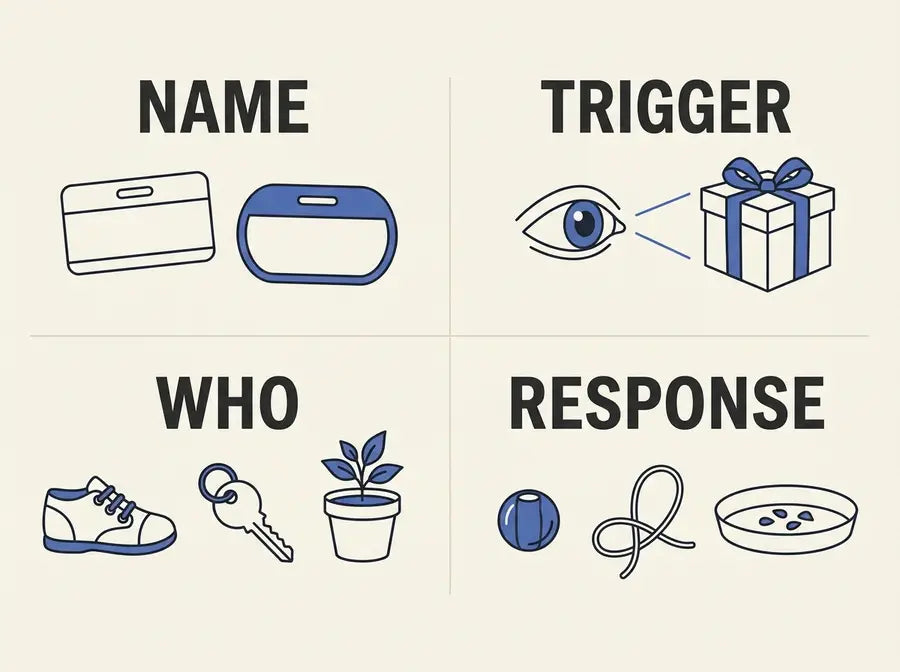
The practices described below are cultural and religious traditions, not evidence that a gaze causes illness or that an amulet guarantees protection. They can carry family memory and spiritual meaning while remaining distinct from medical advice or a measurable promise about luck.
Mediterranean traditions: mati and malocchio
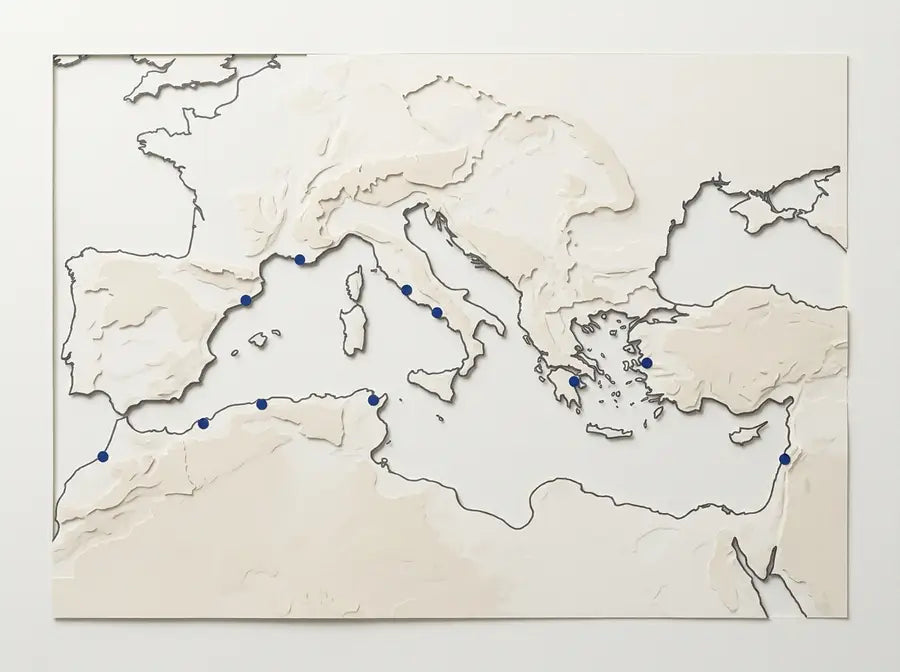
Ancient Mediterranean writing and objects contain many references to dangerous sight, envy, and protective responses. The evidence comes from different periods and communities rather than one clear invention point. Readers looking for chronology can follow the separate account of where the evil eye belief began.
The Greek mati
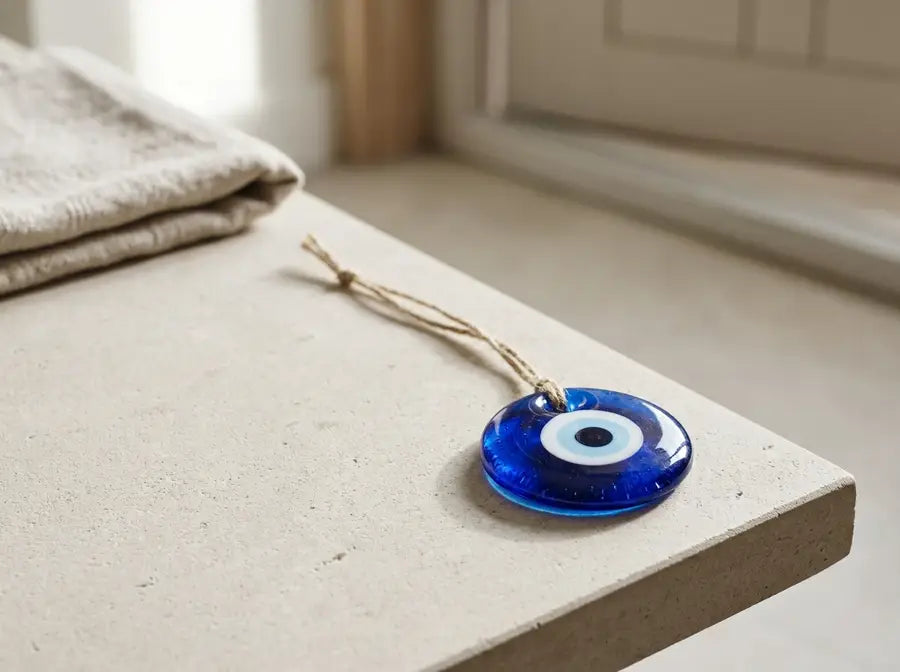
In Greek, mati means “eye” and is commonly used when discussing the evil eye. Admiration and envy both matter in accounts of how someone may be affected. Blue eye ornaments are widely recognizable, while blessings, prayers, and family responses vary by place and household.
The Italian malocchio
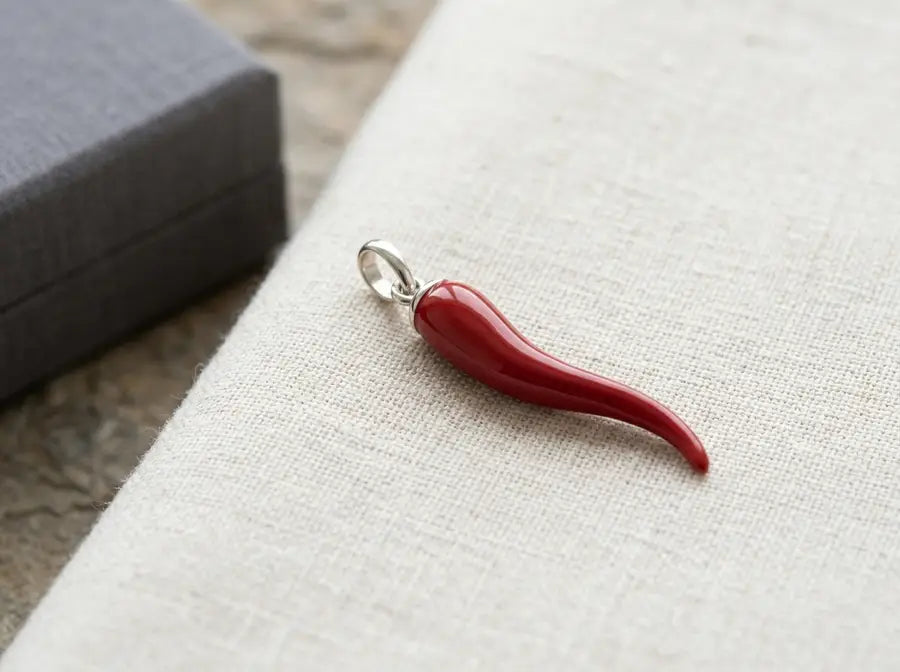
The Italian word malocchio literally means “bad eye.” Regional traditions have used prayers, gestures, and objects such as horn-shaped charms in response. A cornicello may be visually distinctive, but it should not be treated as the single Italian answer or detached from the local custom that gives it meaning.
Mati and malocchio belong to a recognizable Mediterranean family of ideas, yet their names and protective forms are not interchangeable. That distinction is a pattern throughout this subject: resemblance can show contact or a shared concern without proving that every community follows the same tradition.
Turkey: nazar and the eye bead
In Turkish use, nazar refers to the harmful attention or evil-eye concern, while nazar boncuğu names the eye-shaped glass bead associated with protection. English often calls the bead itself “the evil eye,” which hides the useful difference between the feared gaze and the object meant to answer it.
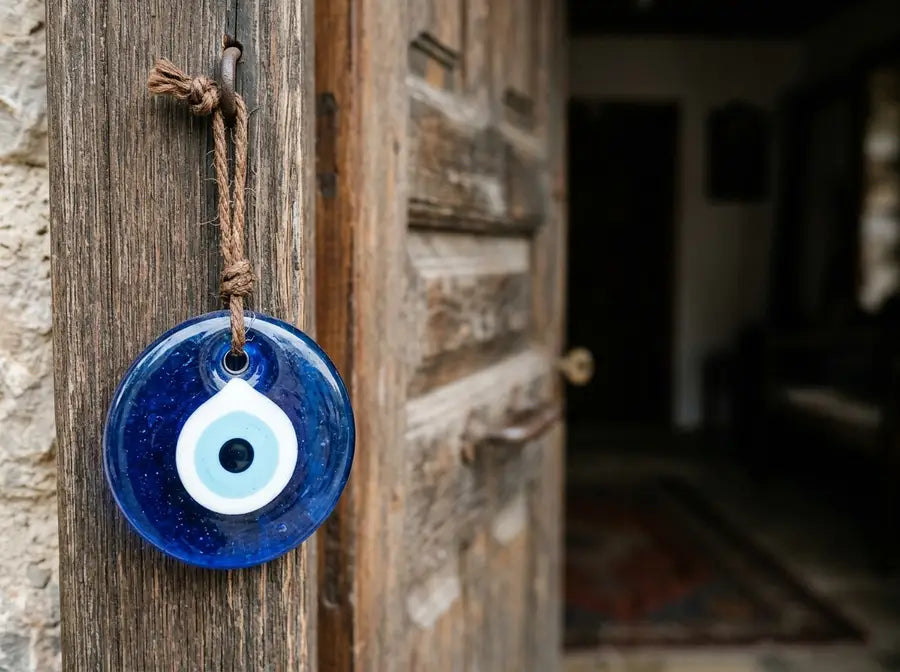
UNESCO documentation describes Nazar Boncuğu as a living glass craft in Turkey. Finished beads are used as accessories or decorations and are especially associated with transitions such as birth and marriage. Layers of colored glass form the eye, linking the symbol with a specific making tradition as well as a belief.
A bead worn on the body, placed near an entrance, or given with care can carry social meaning without functioning as proof of supernatural protection. It may express family custom, cultural familiarity, or personal intention. Those uses should not be reduced to a generic claim that every blue eye means the same thing.
Arabic and Persian settings
Al-‘ayn in Arabic-speaking communities
Arabic-speaking communities commonly use al-‘ayn when discussing the evil eye. Praise for a child, a possession, or visible success may be followed by a blessing or religious phrase. The caution does not always assume malice; strong admiration can also be treated as attention that needs care.

In Muslim settings, prayer and reliance on God are central for many believers. Opinions about amulets are less uniform: some people use eye beads or other objects as familiar cultural signs, while others reject charms on religious grounds. Presenting one item as required Islamic practice would erase that disagreement.
Persian cheshm-zakhm
The Persian expression cheshm-zakhm can be translated as a “blow by the eye.” Encyclopaedia Iranica records envy, praise, and even unintended harm within the belief. Historical and folk responses have included spoken formulas, amulets, blue beads, and the burning of wild rue seeds.

Arabic and Persian examples often appear together in broad summaries of the Middle East, but language, ritual, and religious interpretation still differ. A phrase spoken after praise and a household practice involving rue may address a related fear without belonging to one shared ceremony.
Jewish traditions and ayin hara
The Hebrew expression ayin hara names the evil eye and appears in rabbinic discussion as well as later Jewish folklore. It can refer to a harmful look, envy, or the risk attached to displaying good fortune. Some people take the idea literally; others know it mainly through family sayings and customs.
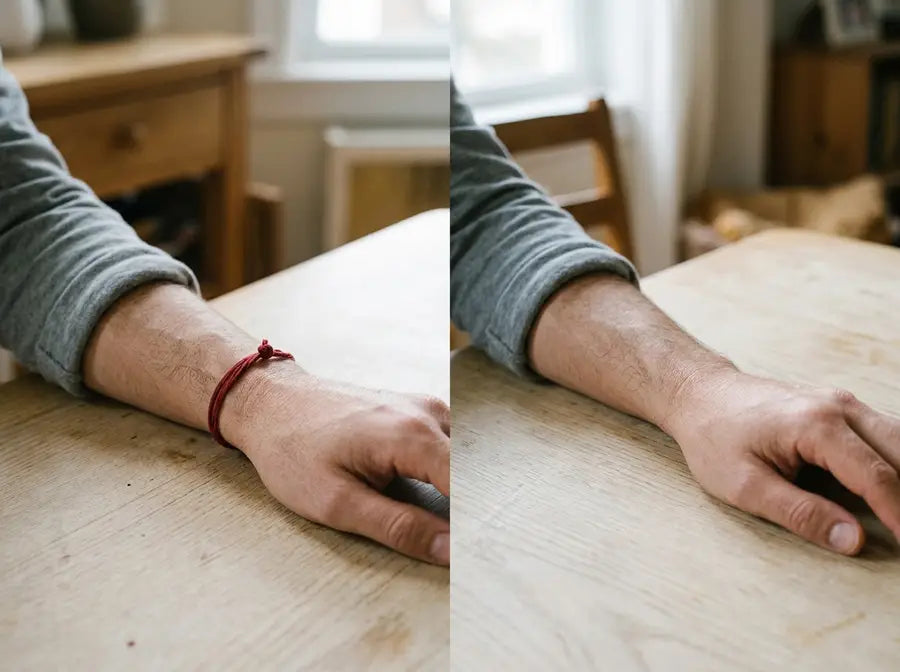
Responses have included blessings, modest speech, verbal formulas, red threads, and amulets in some communities. Jewish sources also record disagreement about amulets and magic, so none of these practices defines Judaism as a whole. The difference between an eye bead and the Hamsa and the evil eye deserves particular care.
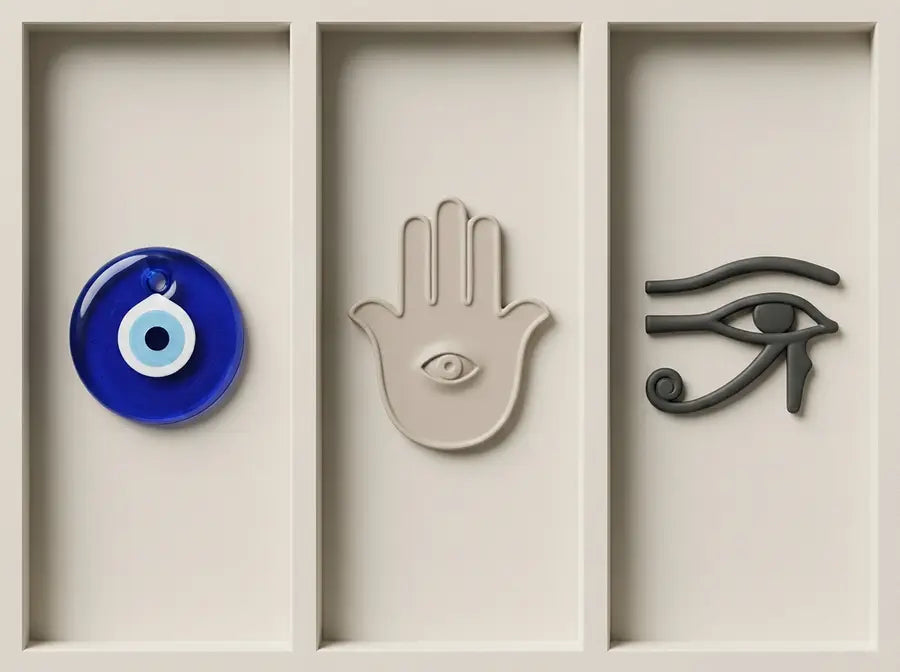
The Hamsa appears in Jewish, Muslim, Middle Eastern, and North African settings. Some versions include an eye and some do not. Treating every hand-shaped amulet as exclusively Jewish, exclusively Muslim, or simply another name for a nazar bead loses the layered history that makes the object recognizable.
South Asian nazar and drishti
South Asia contains several related vocabularies rather than one regional version. Nazar and buri nazar are familiar terms in parts of India and Pakistan, while drishti appears in other linguistic and religious settings. The words can overlap, but their use changes across languages, regions, and families.

Babies, weddings, beauty, a new home, or visible success may receive special attention. Depending on the household, a response might involve a blessing, black thread, dark mark, bead, household display, or ritual. No single object or procedure can stand for “South Asian belief” as a whole.
Some families use nazar or drishti to explain physical discomfort or a sudden change in mood. Those descriptions belong to a cultural framework, not a medical diagnosis. Respecting the custom does not require delaying appropriate care when a child or adult is unwell.
Latin American mal de ojo
Mal de ojo is the Spanish expression for the evil eye, although its customs vary across Latin American, Caribbean, Hispanic, and diaspora communities. Children are often described as especially vulnerable. Envy can be part of the explanation, but affectionate praise or prolonged admiration may also be handled cautiously.

Depending on family and place, responses may include prayer, touch, a red bracelet, an amulet, or a cleansing practice. The dedicated guide to mal de ojo in Spanish-speaking traditions examines those variations and the health boundary more fully.
Translation can make mal de ojo sound like a direct copy of Mediterranean or Turkish practice. It is more accurate to see it as a family of local practices shaped by region, religion, household, and migration. Similar language does not erase those histories.
What changes and what stays similar
The cultures above do not share one origin story, object, or ritual. They do repeat several social concerns. Looking at those concerns side by side makes comparison possible without pretending that a Greek ornament, Turkish glass bead, Persian household practice, and Latin American bracelet are interchangeable.
- The trigger: Envy is common, but admiration, praise, or concentrated attention may also be treated cautiously.
- The vulnerable moment: Babies, weddings, homes, health, beauty, prosperity, and public success often draw concern.
- The response: Communities may use prayer, blessings, modest speech, gestures, beads, threads, amulets, or household rituals.
- The personal stance: The belief may be religious, folkloric, familial, symbolic, aesthetic, or rejected altogether.
The stable center is not a universal blue charm. It is the idea that attention can carry social and spiritual weight, especially when good fortune becomes visible. The local response tells us how a community understands envy, vulnerability, care, and the boundary between private life and public praise.
Is the evil eye pagan or religious?
The evil eye is not a religion, and it does not come from only one faith. Related beliefs appear in Jewish, Muslim, Christian, Hindu, Mediterranean folk, and other cultural settings. Calling the entire subject “pagan” is too broad to describe traditions that developed inside different religious worlds.
People within the same religion may disagree sharply. One household treats the evil eye as a serious spiritual concern, another keeps a family custom without taking it literally, and another rejects the idea. Religious texts, folk practice, and contemporary jewelry culture should not be collapsed into one position.
Is the evil eye a closed practice?
There is no single authority governing every belief described in English as the evil eye. The broad symbol is used across many communities, but a particular prayer, healing rite, initiation, or sacred object may still be private, community-specific, or inappropriate to reproduce without guidance.
Is wearing the evil eye cultural appropriation?
Wearing an eye motif is not automatically respectful or automatically appropriative. Context matters: which form is being used, what claims are made about it, and whether a living tradition is treated as a costume or sales story. A universal yes-or-no answer would ignore the same cultural differences this article is trying to preserve.
A careful wearer can name the object accurately, learn where that form comes from, and avoid copying rituals they do not understand. It also helps to avoid health, luck, or protection guarantees. Respect begins with honest context rather than a claim to personal ownership of someone else’s tradition.
Reading and wearing the symbol today
Modern jewelry and décor move symbols across borders quickly. Before assigning meaning, look at the whole object. A round nazar bead, a hand-shaped Hamsa, and the ancient Egyptian wedjat eye may all contain eye imagery, but they have different forms and histories.
Personal use can carry several meanings at once: family memory, a wish for protection, a gift, or an appreciation of the design. Once the cultural context is clear, practical questions about construction, scale, comfort, and use belong in the guide to choosing a first evil eye piece.
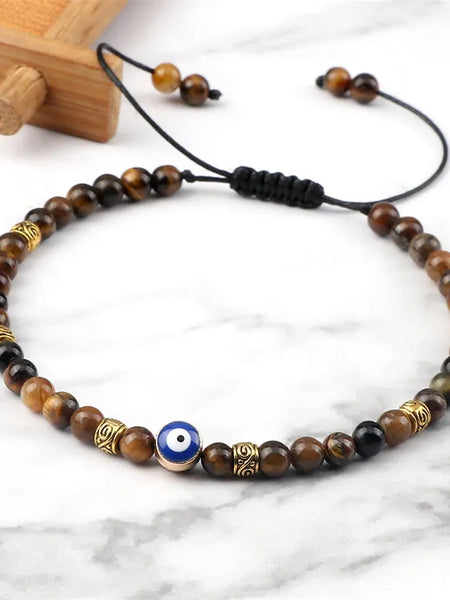

Elegant Zircon-Studded Evil Eye Beaded Bracelet - Unisex Fashion Accessory for Special Occasions and Daily Wear
$10.75 - $10.99
View
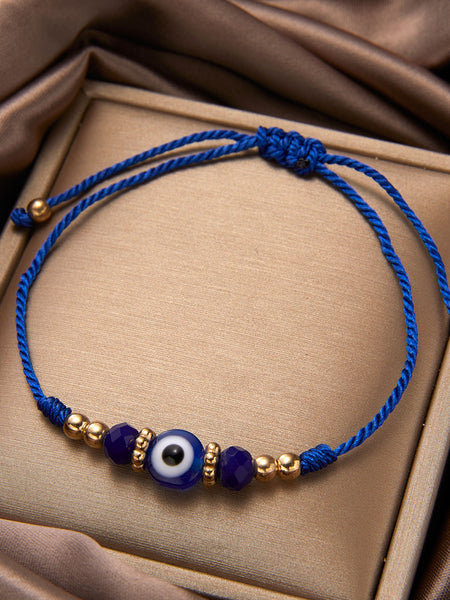

Artfully Crafted, Adjustable Turkish Evil Eye Charm Bracelet – Perfect Accessory for a Fashion-forward, Summer Boho Look
$11.96 - $12.04
View


Evil Eye Cuff Bracelet with Wide Textured Panel and Blue Outline
$12.78
View
Readers ready to browse can explore evil eye jewelry after deciding what kind of object they are looking at and what meaning they want to acknowledge. The collection is a next step, not evidence that one modern design represents every tradition described above.
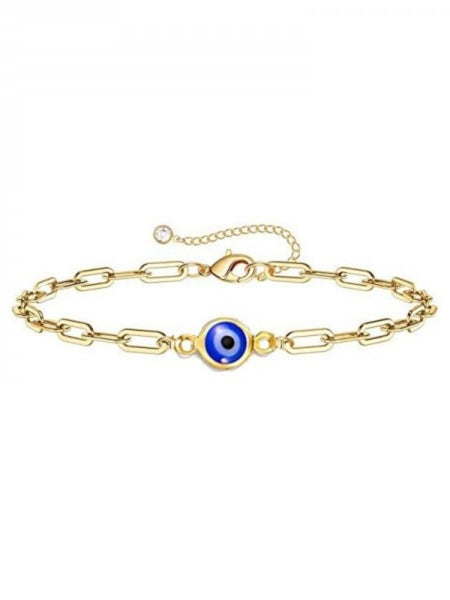

Chic and Versatile, Adjustable Turkish Evil Eye Charm Bracelet – An Essential Bohemian Summer Accessory for Style-conscious Individuals
$11.19
View
 BEST SELLER

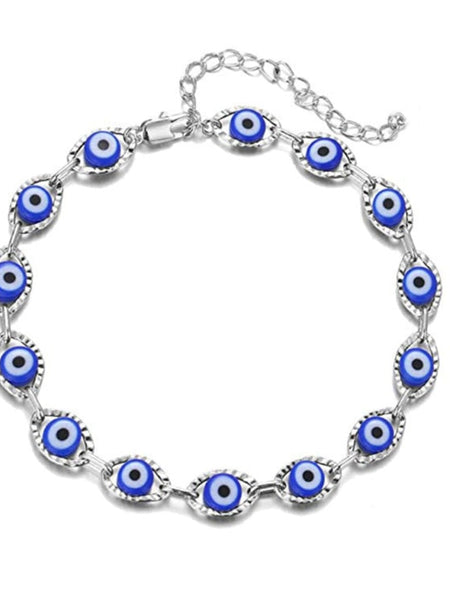
Delicate Turkish Evil Eye Charm Bracelet - An Adjustable, Radiant Gold Colored, Copper Chain Accessory for Modern Women
$10.93 - $11.06
View


Evil Eye Mesh Bracelet with Eyelash Detail and Open Eye Accent
$12.15
View
A better way to compare evil eye traditions
When you encounter an eye symbol, begin with three questions: what is it called here, which community is using it, and where does the claimed meaning come from? Those questions work in a museum, family home, market, or jewelry store because they keep the object attached to its context.
The evil eye has traveled widely, but cultural reach does not make every version universal. Leaving room for regional difference, family disagreement, and uncertainty gives the subject more meaning than a single chart of countries, religions, and promised forms of protection ever could.

179
Products
Evil Eye Jewelry
Shop Evil Eye jewelry in symbolic necklaces, bracelets, rings, earrings, pendants and charm styles for everyday layer...
Explore
82
Products
Evil Eye Accessories
Crafters and gift-givers, start here—Evil Eye Accessories span beads for jewelry projects, pins and magnets, and deco...
ExploreSources & further reading
- Smithsonian Institution Libraries: The Evil Eye, edited by Clarence Maloney
- UNESCO: Craftsmanship, practices and beliefs of Nazar Boncuğu charms
- Encyclopaedia Iranica: Čašm-Zaḵm
- My Jewish Learning: Evil eye in Judaism
- British Museum: Khamsa hand amulet used by Muslim or Jewish communities
- The Metropolitan Museum of Art: Horned-hand and amulet traditions against the evil eye
- The Metropolitan Museum of Art: Wedjat Eye Amulet
- British Museum: Indian amulet recorded as averting the evil eye
- National Library of Medicine: Cultural context of mal de ojo
