

Back to Evil Eye
A multicolored evil eye can combine the eye motif's traditional association with protection from envy and a palette chosen for personal meaning or visual style. Several colors can bring different contemporary associations together, but there is no reliable evidence that a multicolored charm is stronger than a blue one.
The useful distinction is between documented tradition and modern interpretation. Eye-shaped amulets and colored-glass beadwork have a long material history; the tidy color charts found in today's jewelry and gift guides are newer, variable ways of reading those designs.
More colors can carry more personal associations, but they do not make an evil eye amulet more powerful.
What does a multicolored evil eye mean?
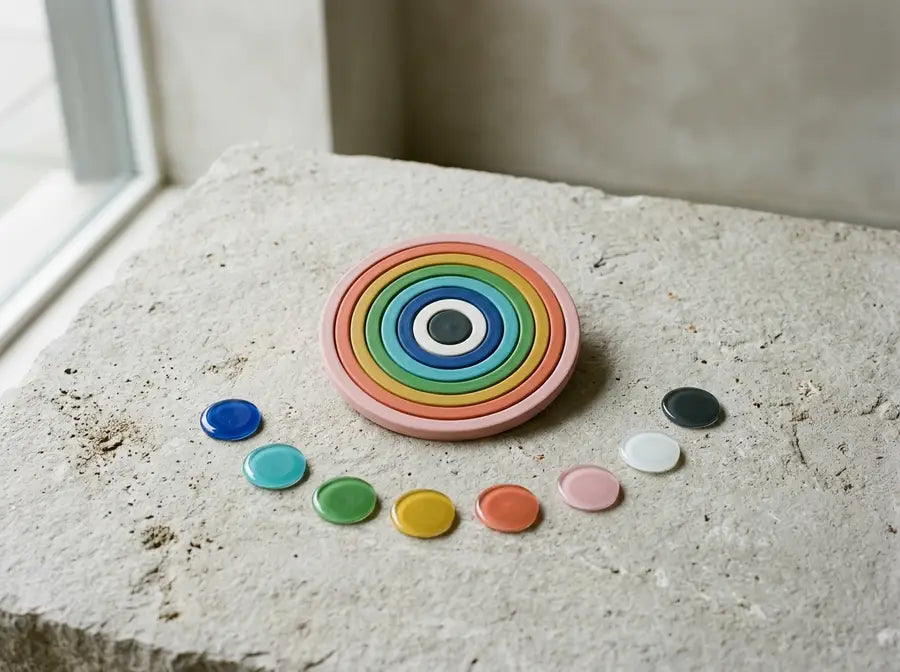
A multicolored evil eye can represent a wish for protection alongside variety, balance, or personal expression. The protective meaning belongs to the wider evil eye belief and amulet tradition. The extra colors add a second layer that depends on the object, its maker, and the person who wears or displays it.
The design may be one eye built from several concentric colors, a bracelet made with eye beads in different shades, or a larger object that repeats the motif across a mixed palette. These arrangements do not have one fixed definition. One person may use several colors to remember several intentions; another may simply prefer a brighter piece.
That flexibility is the most honest short answer. A multicolored design can feel inclusive and adaptable without promising comprehensive protection, better luck, healing, or any other measurable result.
Is the multicolored evil eye traditional?
Yes, in one important sense: traditional eye beads were not made from a single flat color. Historic objects and documented Turkish beadmaking use layered or contrasting glass to create a recognizable eye. What the evidence does not establish is an ancient, universal chart assigning one life benefit to every modern shade.
What historical objects show
A blue-and-white glass eye bead in the British Museum is dated to roughly 750-300 BCE and associated with the eastern Mediterranean. It confirms that layered eye beads existed in antiquity. It does not prove a direct, unbroken line to every modern nazar design, and its uncertain production place should not be turned into a single-origin story.
UNESCO documents Turkish nazar boncuğu craftsmanship and the eye-shaped glass bead's use as an accessory or decoration. Turkey's Culture Portal describes artisans applying different colors of molten glass and records purple, white, yellow, green, brown, red, and blue-related glass in Izmir beadmaking. This supports a real multicolor craft palette, not a fixed meaning for each color.
Readers interested in the wider chronology can follow the separate guide to evil eye origins. The relevant point here is narrower: colored glass has long been part of eye-bead construction, while today's symbolic color menus require more caution.
What modern color charts add
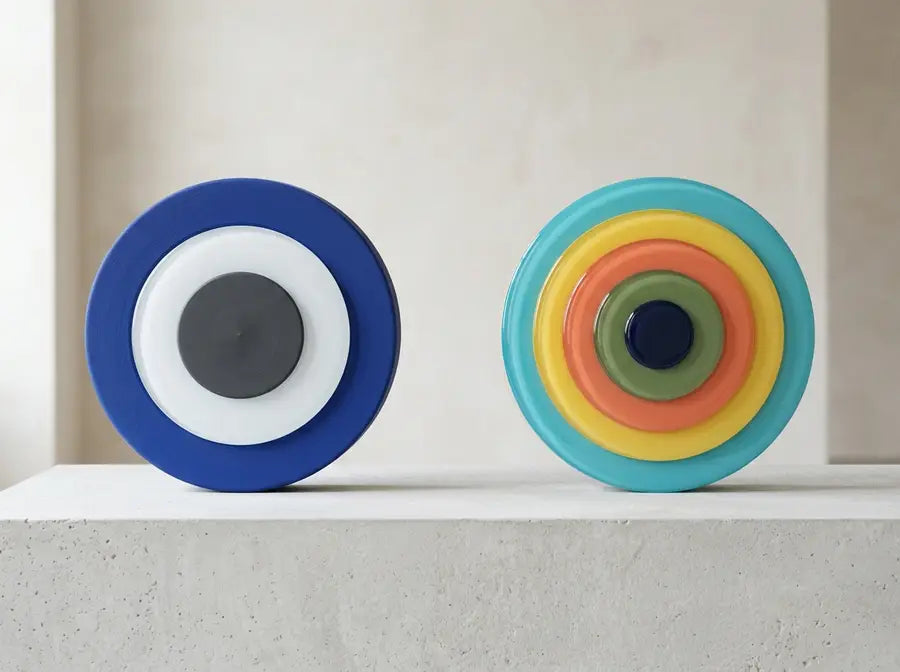
Modern guides often associate blue with protection or calm, green with growth, red with courage, yellow with optimism, pink with affection, purple with reflection, black with strength, and white with clarity. These can be useful prompts for choosing a piece, but they are contemporary associations rather than rules shared across every culture.
The Metropolitan Museum of Art makes a helpful broader point about eye-like motifs: a dot-in-circle design may have carried a protective meaning, become decoration, or hold a meaning that is now unknown. The same humility applies to color. Sometimes a palette is symbolic; sometimes it is aesthetic; often it is both.
How do the colors work together?
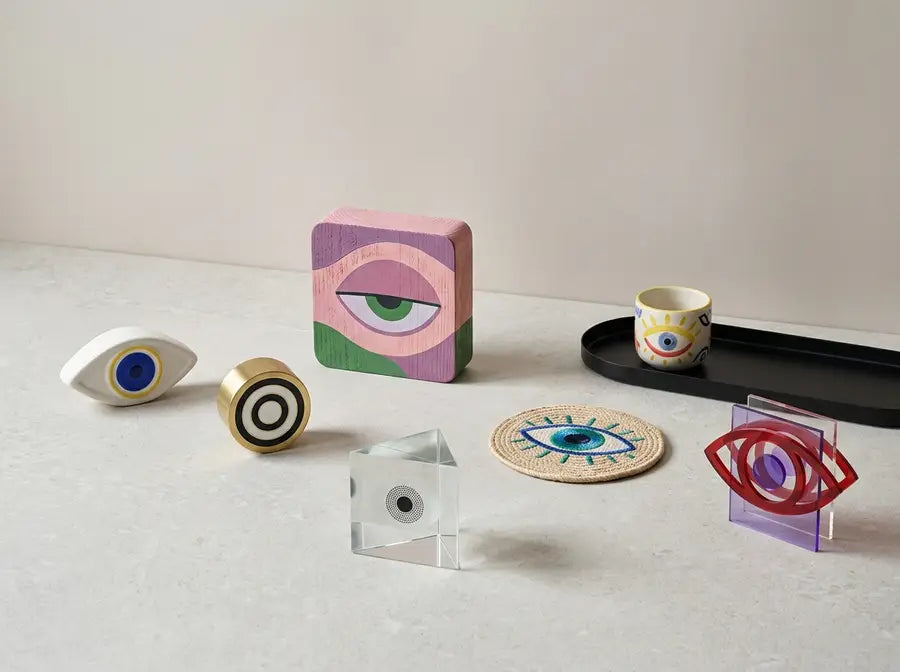
Start with the dominant color and then notice what the supporting colors change. A blue-centered eye with white and black rings stays close to the most familiar nazar appearance. A design led by pink, green, red, or yellow shifts the mood, even when blue remains in the pupil or outer ring.
For a full shade-by-shade reference, use the guide to evil eye color meanings. On a multicolored piece, the better question is not "What power does every band add?" but "Which associations and visual qualities matter to the person choosing it?"
Read combinations as personal pairings
Some combinations suggest an intuitive story without becoming a rule. Blue and white can feel classic and clear. Green with turquoise may suggest growth and calm. Red, orange, and yellow create a warmer, more energetic palette. Pink and purple can be chosen for affection and reflection, while black with white or gold creates stronger contrast.
Those readings describe how people may interpret color today. They do not establish that a red-and-yellow charm produces courage or that a green-and-blue one changes health, fortune, or energy. The distinction keeps personal symbolism meaningful without presenting belief as a guaranteed outcome.
Multicolored and rainbow are not always identical
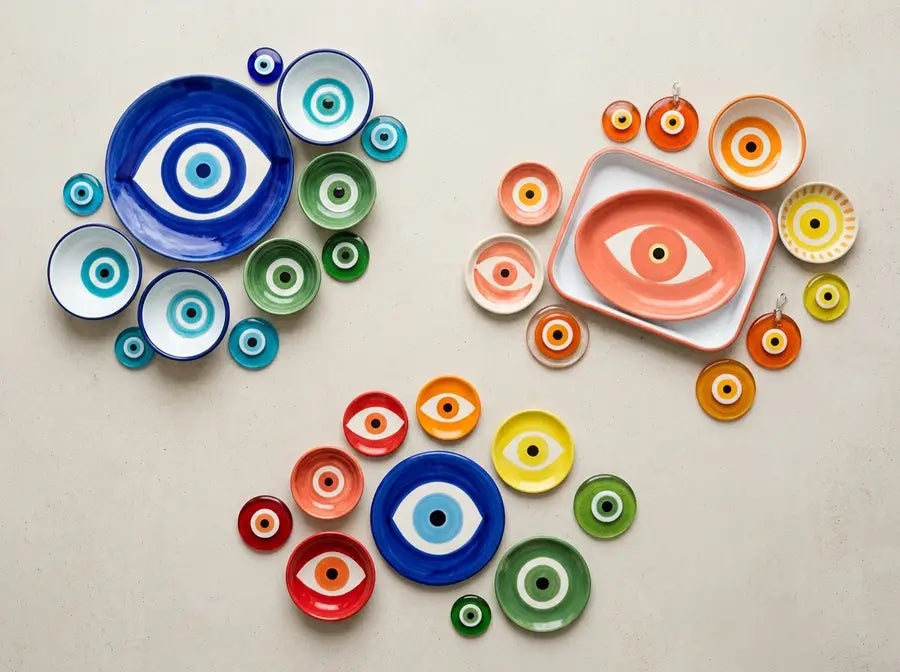
Multicolored is the broader term. It can describe any piece using more than one prominent color. Rainbow evil eye usually suggests a fuller spectrum or an intentionally rainbow-like arrangement, although shops and wearers sometimes use the terms interchangeably.
A rainbow palette may be chosen to express variety, inclusion, hope, or a bright personal style. These are reasonable present-day interpretations, not an ancient definition attached to every rainbow design.
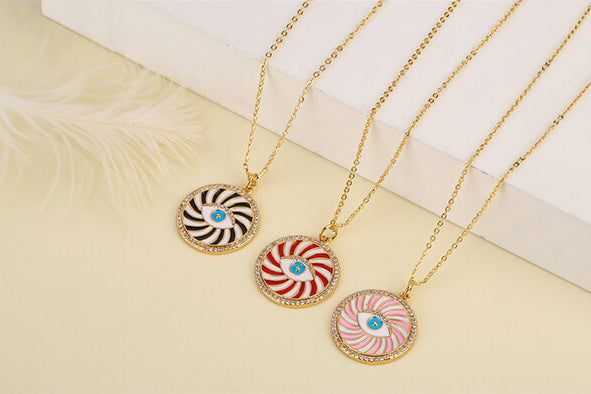
To see how combined palettes translate into wearable formats, compare a bracelet, earrings, and a necklace. Confirm the selected variant on each current product page, because a title or featured image may not show every available color direction.
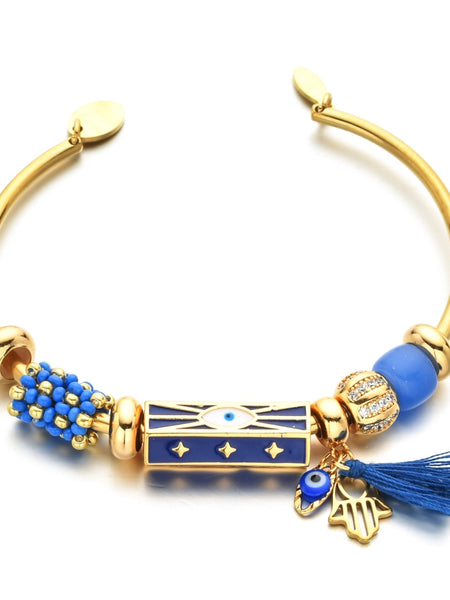

Charming Bohemian Colorful Evil Eye Beaded Cuff Bracelet - Unique Handmade Ethnic Jewelry Gift for Women and Unisex
$18.29
View


Evil Eye Braided Cord Bracelet with Hamsa or Sunburst Charm
$11.37 - $11.46
View
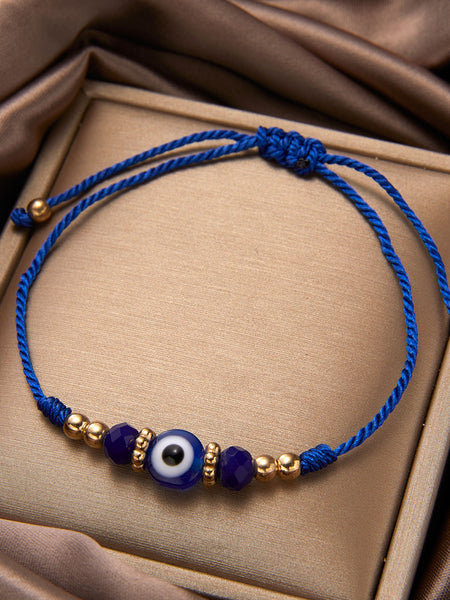

Artfully Crafted, Adjustable Turkish Evil Eye Charm Bracelet – Perfect Accessory for a Fashion-forward, Summer Boho Look
$11.96 - $12.04
View
Is a multicolored evil eye more powerful?
There is no reliable basis for ranking an evil eye by the number of colors it contains. Within cultural belief, the eye-shaped amulet is associated with protection from envy or harmful attention. Adding colors can make the object more personally expressive, but it does not create a demonstrably stronger shield.
The same boundary applies to claims about healing, anxiety, wealth, luck, and positive energy. A wearer may connect a color with calm, courage, or a fresh start, and a gift can communicate care. Those meanings are symbolic and personal; they should not be presented as medical, financial, or supernatural guarantees.
Blue remains the most recognizable nazar color and one of the best documented in traditional use. That makes it historically legible, not objectively stronger. Readers comparing the classic palette can look more closely at dark blue and light blue evil eye meanings.
How to choose a multicolored evil eye
Choose the object before trying to decode every color. A bracelet has to feel comfortable and fit the way you expect. Earrings need a scale and closure that suit the wearer. A hanging piece needs an appropriate size and attachment point for its intended location. Symbolism does not replace those practical checks.
Use three simple filters
- Context: Decide whether the piece is for personal wear, a gift, a home, a vehicle, or another setting.
- Palette: Identify the colors actually visible in the selected variant instead of relying only on a product title or category label.
- Construction: Check the current product page for dimensions, materials, closure, care, and availability rather than inferring those details from an image.
If the piece is a gift, explain the intention in ordinary language: care, protection in the traditional symbolic sense, a new beginning, or simply colors the recipient enjoys. The evil eye gift guide can help with the occasion, while the buying FAQ covers practical first-piece questions.
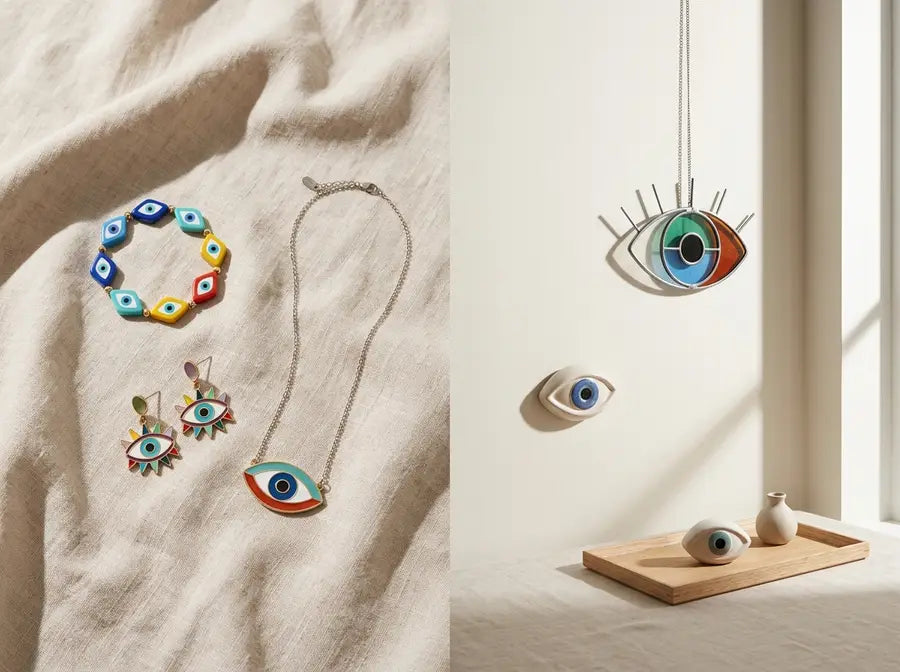
Displayed formats raise a different set of practical questions. Compare a hanging piece, a wall-mounted plate, and a small tray, then verify dimensions, attachment or placement details, and the selected design on each current product page.


Evil Eye Cuff Bracelet with Wide Textured Panel and Blue Outline
$12.78
View


Evil Eye Mesh Bracelet with Eyelash Detail and Open Eye Accent
$12.15
View
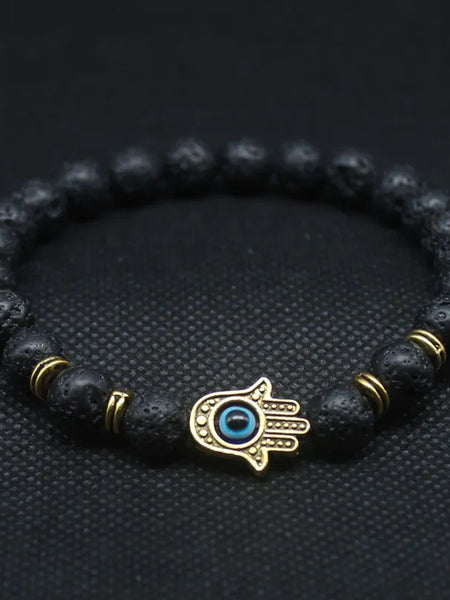

Elegant Unisex Black Lava Stone Bracelet with Geometric Fatima Hamsa Hand - Fashionable Evil Eye Protection Accessory
$10.97
View
For a wider browse, separate the decision by where the object will be used: something worn, or something displayed.
349
Products
All
Shop evil eye products across jewelry, accessories, home decor, clothing, and tech accessories. Explore symbolic styl...
Explore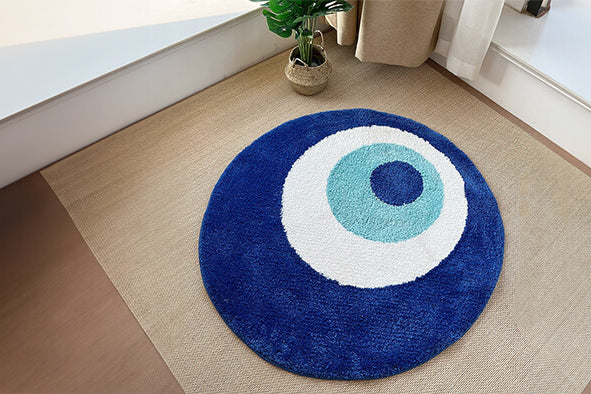
82
Products
Evil Eye Accessories
Crafters and gift-givers, start here—Evil Eye Accessories span beads for jewelry projects, pins and magnets, and deco...
ExploreMulticolored evil eye questions
Does each color keep its own meaning?
It can, if the wearer or giver intentionally chose each color for a particular association. There is no universal rule requiring that reading. A mixed palette can also function as one overall design rather than a bundle of separate meanings.
What is the strongest color in a multicolored evil eye?
No color has been shown to provide stronger protection. Blue has the clearest traditional recognition in the nazar context, while other colors can carry contemporary or personal associations. Choose by context and meaning, not by a promised power ranking.
Can a multicolored evil eye be given as a gift?
Yes. It can communicate care, a symbolic wish for protection, or appreciation of the recipient's style. A brief note about why you chose the colors is more useful than promising that the object will change luck, health, or future events.
Can you wear one only for its appearance?
Yes. People relate to the motif through family custom, cultural identity, belief, gifting, and design, sometimes in combination. Choosing it for color or appearance does not require claiming a spiritual effect. Learning the symbol's context still helps you describe and use it respectfully.
Does multicolored mean the same thing in every culture?
No. Evil eye beliefs and amulets appear in different communities, but names, materials, customs, and interpretations vary. Treat a specific color explanation as attributed to a maker, source, wearer, or tradition rather than assuming a global code.
What to remember
A multicolored evil eye combines a recognizable eye motif with a flexible palette. Its broad symbolic meaning can include protection, variety, balance, and personal expression, but the exact reading belongs to the wearer and context.
Historical evidence supports colored-glass eye beads and living nazar craftsmanship. It does not support one ancient chart for every color or the claim that more colors create stronger protection. Use modern associations as a thoughtful way to choose, not as promises about what an object will do.
