

Back to Evil Eye
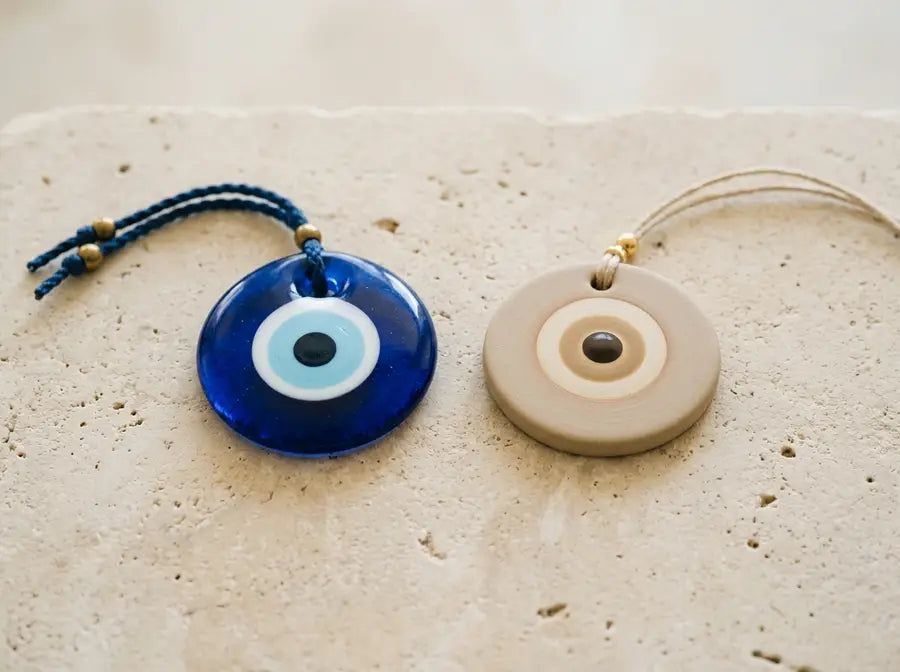
A beige evil eye commonly represents calm, simplicity, neutrality, and understated protection in contemporary color symbolism. Those associations are modern rather than one ancient rule shared across cultures.
The eye-shaped amulet carries the older protective tradition. Beige changes its visual mood, making it useful for subtle jewelry, quiet interiors, and gifts chosen for someone who prefers neutral colors.
Blue carries the older color tradition; beige adds a quieter, contemporary message to the same watchful eye.
What does a beige evil eye mean?
The most useful short answer is calm, simplicity, and understated protection. Beige softens the familiar eye motif, so the symbol feels less vivid than cobalt blue and less stark than black or white. It often suits people who want meaning without a high-contrast look.
That answer needs one boundary: beige does not have a single, documented meaning carried unchanged from antiquity. Its associations come mainly from contemporary color language, jewelry design, and personal intention. The protective idea comes from the eye-shaped amulet; beige adds a present-day tone.
That makes the meaning flexible, but not empty. Someone may choose beige as a reminder to keep life clear and uncluttered, to hold steady boundaries, or simply because the color fits a neutral wardrobe. The wider evil eye color guide places that choice beside the rest of the modern palette.
The tradition belongs to the eye, not to beige
The phrase "evil eye" can name the harmful gaze described in many traditions or the charm used in response to it. The meaning of the evil eye varies by region, but envy, unwanted attention, and protection are recurring themes. The charm is meant as a guard, not as a hostile symbol.
Customs differ across Turkish, Greek, Middle Eastern, Mediterranean, South Asian, and other communities. Some people treat the belief literally, some keep it as family or cultural practice, and others wear the eye as a meaningful design. A color page should leave room for all three positions.
Why blue has stronger historical evidence
The familiar Turkish nazar is most closely identified with blue glass and concentric rings. Museum collections, cultural institutions, and research on Turkish folk culture give blue a much stronger documented role than the expanded modern color chart. For that history, compare the blue evil eye meaning and the difference between dark and light blue.
Traditional examples often combine deep blue, white, pale blue, and a dark center. The visible eye pattern matters with the color: it creates the watchful form placed on jewelry, doors, vehicles, and other objects within protective practice.
Where beige fits
Beige belongs to the wider contemporary palette. Current makers can produce eye motifs in many colors, and wearers often add meanings through modern color associations. There is no reliable evidence that beige historically formed a separate protection category with its own fixed rules.
A beige charm still uses the same recognizable eye. Its color makes the object feel quieter and easier to blend with natural textures, warm metals, pale walls, or understated clothes. That is a styling and personal-symbolism choice, not proof of a different protective effect.
What beige can symbolize today
Contemporary interpretations usually gather around a few related ideas. They are useful as language for intention or gifting, as long as they are not presented as medical, spiritual, or practical guarantees.
Calm and composure
Beige has a low-contrast, visually quiet character. In an evil eye design, that can suggest composure, less noise, and a wish to respond thoughtfully rather than react quickly. The charm can act as a personal reminder, but it cannot create calm or treat anxiety.
Simplicity and restraint
A beige eye often works with minimal jewelry and uncluttered interiors. Its meaning can follow that visual restraint: keeping what is useful, avoiding unnecessary complication, and choosing a symbol that does not need to dominate an outfit or room.
Neutrality and personal balance
Neutral does not have to mean passive. Beige can represent a measured position, steady boundaries, or space to think before choosing a direction. These are personal readings rather than shared cultural rules, so two people may value the same color for different reasons.
Beige vs. nearby neutral evil eye colors
Neutral shades can look similar in a product image, yet their visual temperature and contrast change the message. Use the comparison as a styling guide, not as a ranking of power.
White and cream
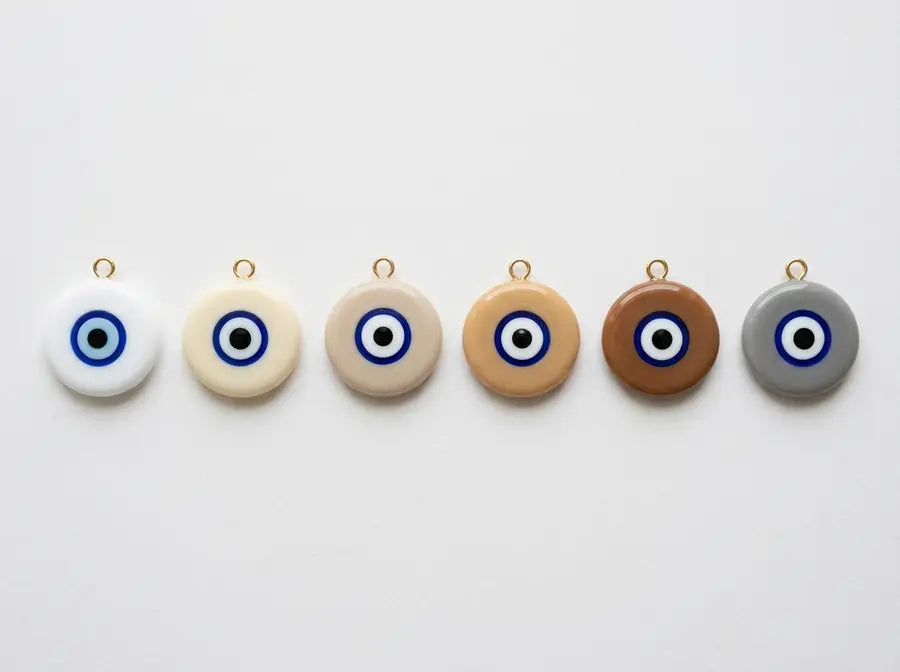
White creates the clearest, brightest neutral and is commonly linked with clarity, purity, or a fresh start. The white evil eye meaning therefore feels cleaner and more defined. Cream is warmer and softer, but it does not have a separate, widely documented evil eye tradition.
Tan, beige, and brown
Tan usually reads earthier and slightly deeper than beige, while brown has more visual weight and a stronger contemporary connection with grounding and stability. The brown evil eye meaning is the better comparison when you want a warmer, more substantial neutral. Beige remains the quieter middle ground.
Beige and grey
Beige leans warm; grey usually feels cooler and more reserved. Both can suggest balance or restraint in modern color symbolism, but the grey evil eye meaning fits better when cool composure matters more than natural warmth.
Color names also vary between makers, screens, and materials. One shop's cream may look like another shop's beige, and tan may sit close to light brown. Compare the actual item instead of relying on the label alone, especially when the shade is part of a gift message.
Does beige change how an evil eye protects?
There is no verified scale showing that one evil eye color provides stronger protection than another. Within protective belief, the eye motif and the meaning given to it carry the main role. Blue has the clearest traditional color identity, but that history is not a measurable power rating.
Beige is best understood as a contemporary layer on the older symbol. A wearer may connect it with peace, simplicity, or boundaries, while another person may choose it only because the shade fits their style. Neither choice needs a claim that the color controls events.
The same caution applies to promises about healing, luck, wealth, safety, or emotional change. A charm can hold cultural, family, aesthetic, or personal significance. It should not replace healthcare, practical precautions, financial judgment, or direct support when those are needed.
How to choose and use a beige evil eye
For everyday jewelry
Start with the format you already wear. A small pendant or slim bracelet keeps the eye subtle, while larger beads make the motif easier to notice. Gold-tone details tend to emphasize beige's warmth; silver-tone details create a cooler contrast.
Comfort matters more than a color description. Check size, closure, weight, edges, and how the piece sits beside a watch or other jewelry. The daily evil eye bracelet guide covers fit and routine when the piece is meant for regular use.
For a gift
Beige can suit someone whose wardrobe or home uses cream, sand, camel, taupe, or other quiet neutrals. The message can be simple: a wish for steadiness and protection expressed through a color they are likely to use. Avoid telling the recipient that the charm guarantees an outcome.
Choose the object around the person, not the symbolism alone. Jewelry works when you know their size and habits; decor may be easier when you know their space. The evil eye gift guide offers broader ideas by recipient and occasion.
For beige and nearby neutral product options
If beige itself is the priority, check the selected variant rather than relying on the first card image. The first two examples currently offer Beige options confirmed by both their labels and visible media: an evil eye shirt and a straw tote.
The third product is a white neutral example, not Beige stock. Availability can change, and a product card may show its default color, so confirm the selected option and current image on the product page before buying.
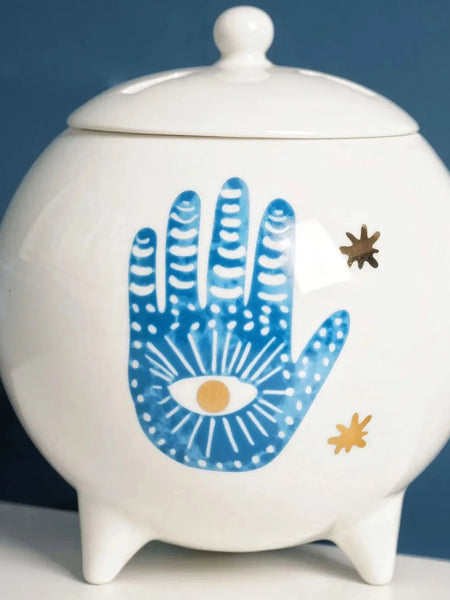
Blue Evil Eye Ceramic Hamsa Hand Jar for Aromatherapy and Stylish Home Decoration
$83.99
View
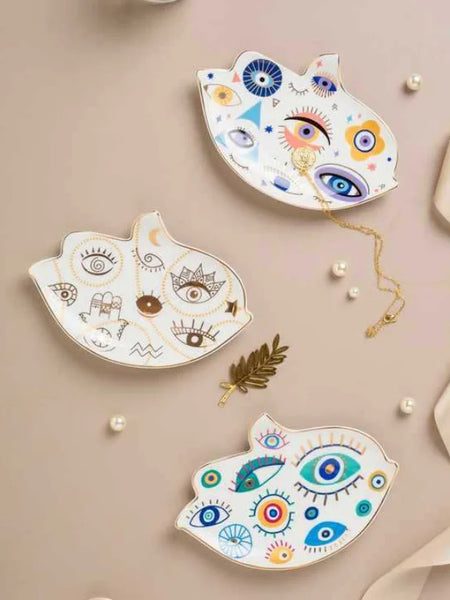
Beautiful Turkish Blue Evil Eye Ceramic Tray for Jewelry Storage and Decorative Home Display
$33.10
View
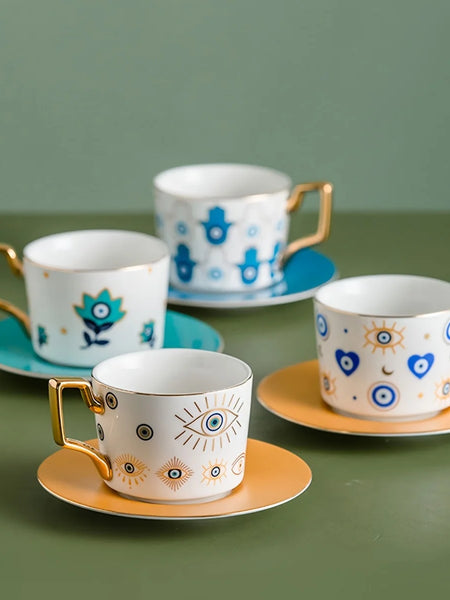
Elegant Blue Evil Eye Coffee Cup and Saucer Set for Tea Lovers and Breakfast Charm
$24.92 - $25.20
View
For home decor
A beige eye can sit quietly in an entryway, bedroom, shelf arrangement, or work area without becoming the strongest color in the room. Check scale and contrast first. On a wall close to the same shade, the motif may disappear; against wood, white, charcoal, or muted green, it is easier to read.
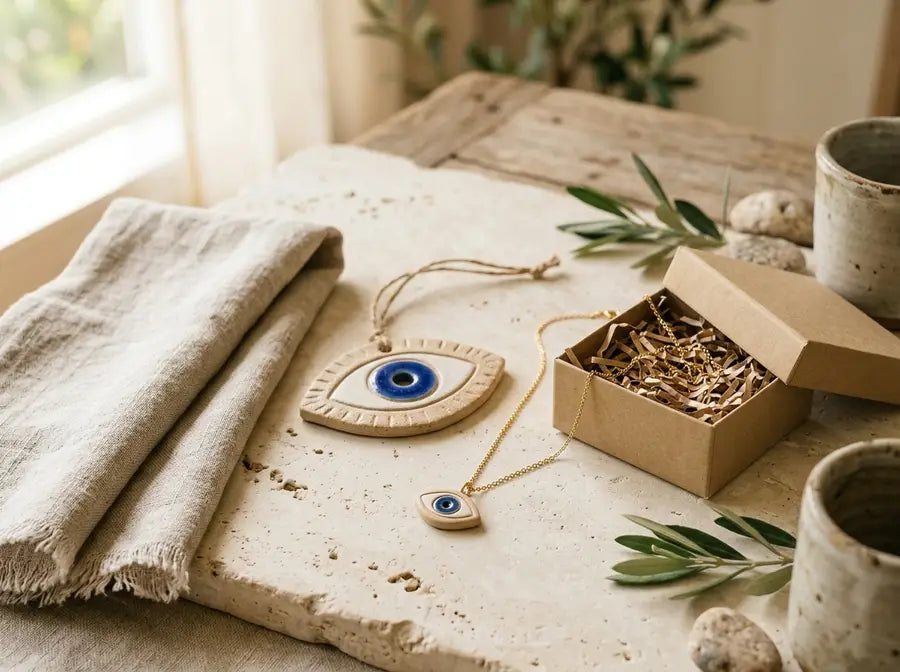
For nearby jewelry and decor formats
The next group compares a necklace, silvery ring, and wall hanging. These examples do not currently list a Beige option, so use the cards to compare scale and placement rather than as evidence of Beige stock.
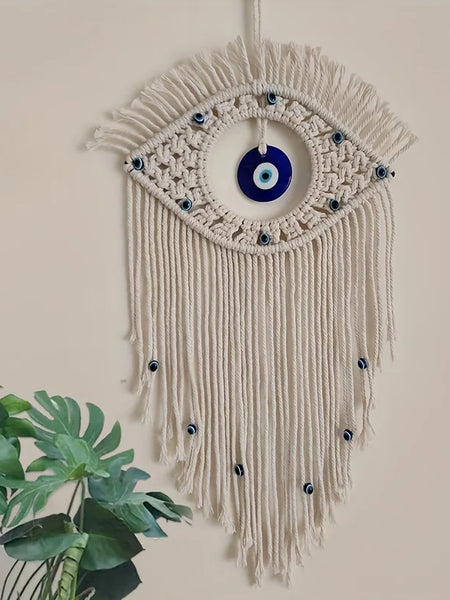
Exquisite Wall Hanging Turkish Evil Eye Pendant Tapestry for Elegant Home Decor and Protection
$17.94
View
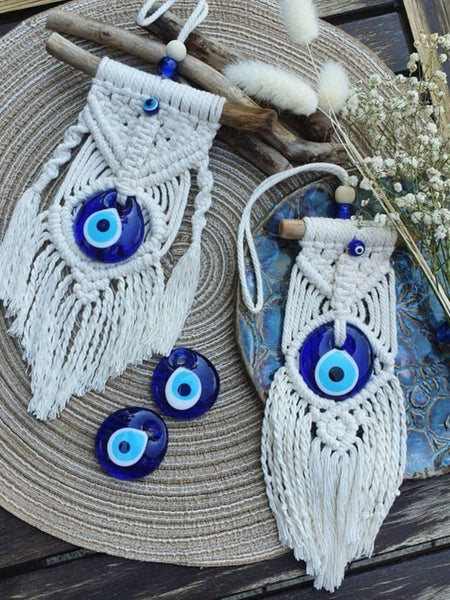
Glass Evil Eye Wall Hanging: Unique Turkish Pendant for Home Decor & Protection
$17.18 - $17.68
View
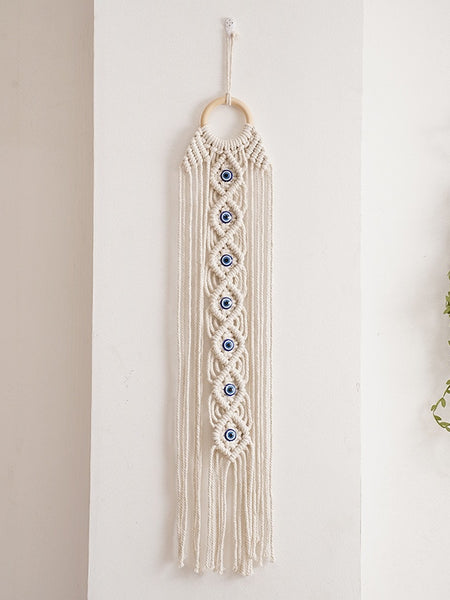
Handwoven Cotton Macrame Tapestry Wall Hanging with Protective Turkish Evil Eye for Stylish Home Decor and Housewarming Gifts
$18.53
View
Once the use is clear, browse more widely by format. The jewelry collection groups wearable pieces, while the home decor collection covers wall, shelf, entryway, and display options. Collection cards do not guarantee Beige availability, so check each product's current options.

55
Products
Evil Eye Home Decor
Shop Evil Eye home decor, from wall hangings and decorative accents to stylish pieces for shelves, tables, and everyd...
Explore
181
Products
Evil Eye Jewelry
Shop Evil Eye jewelry in symbolic necklaces, bracelets, rings, earrings, pendants and charm styles for everyday layer...
ExploreBeige evil eye questions
Is beige a traditional evil eye color?
Not in the same documented sense as blue. Beige appears within the modern expansion of evil eye colors. Its calm and simple associations are contemporary interpretations rather than one rule preserved across Turkish, Greek, Middle Eastern, or other traditions.
Is a beige evil eye more or less powerful?
No color has a verified protection ranking. Blue has stronger historical evidence as the familiar nazar color, while beige offers a different visual and personal message. Claims of greater power belong to belief or individual practice, not measurable fact.
Can I wear a beige evil eye for style?
Yes. People use the eye as cultural practice, a gift, personal symbolism, or design. Choosing it for appearance is reasonable when you understand that the charm has a protective history and avoid presenting modern beige associations as an ancient universal code.
What does a beige evil eye mean as a gift?
It can communicate care, steadiness, and a wish for protection in a quiet form. The best explanation is modest and specific: you chose the eye for its protective symbolism and beige because it suits the recipient's style or represents calm and simplicity to you.
Choose beige with context
A beige evil eye makes the most sense as a modern, neutral interpretation of an older protective symbol. The eye carries the cultural history; the beige color adds calm, simplicity, warmth, and restraint without creating a separate ancient tradition.
Choose it when the quiet palette fits the person, object, or room. Keep the meaning honest, treat protection as symbolism or belief rather than a guarantee, and let the practical details - comfort, size, contrast, and use - decide which piece belongs in daily life.
